


Importance of minerals in potable water
- The inorganic minerals in tap water contribute approximately for 3% of the magnesium and 24% of the calcium to the Recommended Nutritional Intake of calcium and magnesium for a person * for one person (for an adult M / F: calcium requirement +/- 900 mg /d, in magnesium +/- 400 mg /d)! Calcium and magnesium are therefore useful for health. Calcium contributes to bone health, has a beneficial role in hypertension, cardiovascular accidents, colon cancer. Magnesium is involved in the activation of more than 300 enzymatic systems, fights fatigue, diabetes and coronary insufficiency as well as osteoporosis … Given that the average population has a calcium deficiency of around 40% (relative to average nutritional requirements)—and even 70% for magnesium—we believe it is essential to drink mineralized water with a mineral content (dry residue) ranging from 250 to 600 mg/L! This depends on the mineral content of the water and the age of the people concerned, Source: Study on the absorption of calcium and magnesium in natural mineral waters, Patrice Fardellone, CHU Amiens, Université Picardie Jules-Verne, 2015 ; « The mineral elements present in tap water, by participating in the daily mineral supply necessary for the proper functioning of the body, have a definite beneficial role for health. Calcium in water could also play a role in protecting against cardiovascular disease. The role of calcium in fat elimination and blood cholesterol regulation is also recognised » (source Ministry of Health France 2006).
- The WHO (World Health Organization) speaks of an “optimum below 1000 mg / liter“.
- The Superior Council of Public Hygiene of France fixes in its decrees of 1990 and 1995 relating to the quality of water intended for human consumption the quantity of dry residues, after drying at 180 ° C, at maximum 1,500 mg / liter.
- It is also important to have calcium-magnesium (components of limescale) in the water because of the rounder and velvety taste of water containing mineral salts.
Inorganic Minerals
Metabolism and bioavailability of minerals in water (tap or bottled)
The inorganic minerals found in water originate from the rocks the water passes over or through during its cycle (riverbeds, percolation through the Earth’s mineral layers, etc.).
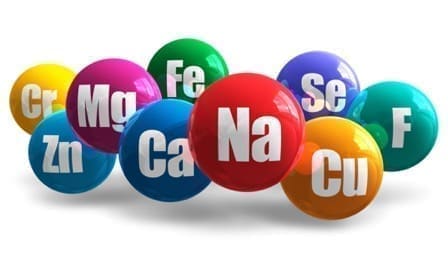
These inorganic minerals make up the “dry residues“—measured in mg/L—found in the water (determined after evaporating the water at 180°C). They consist primarily of calcium (Ca) and magnesium (Mg)—the components of limescale (which forms scale deposits when water is heated)—and, to a lesser extent, trace elements (copper, iron, zinc, selenium, silicon, fluoride, etc.).
There are two methods for measuring dry residues:
- From the water hardness in French degrees (°f) and multiply by 10 mg/L ; this yields the amount of limescale (calcium carbonate, which forms scale). For example, 40°f = 400 mg/L (400 ppm, or parts per million); dividing this figure by 80% gives 500 mg/L of dry residue.
- From water’s conductivity, measured in microsiemens (µS/cm), and apply a standard conversion factor of k = 0.64. For example, 779 µS/cm (for 40°f) × 0.64 = 499 mg/L of dry residue (this is what a TDS meter measures).
Inorganic minerals are measured in mg/L and should not be confused with pollutants, which are measured in µg/L (meaning they are 1,000 times lighter and smaller) and are not detected by TDS (Total Dissolved Solids) meters.
The body absorbs these inorganic minerals at a rate of approximately 48% (this percentage of metabolization is comparable to the absorption rate of organic Ca & Mg found in fruits and vegetables!), specifically:
- Between 37% and 46% for Ca (absorption comparable to that of milk)
- Between 52% and 59% for Mg
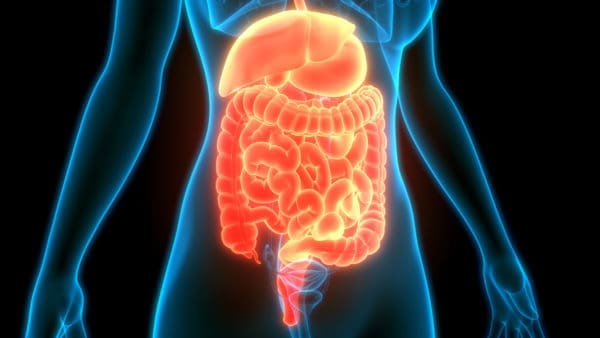
This means they are absorbed by the intestine, cross the intestinal wall, and enter the bloodstream. Once in the blood, they become available to supply the body’s cells. The ~48% of absorbed minerals are available to nourish cells.
This equates to a contribution of approximately 3% of the Recommended Dietary Allowance (RDA) for Mg and 24% for Ca (depending on age, gender, water intake—assumed to be 1.5 L/person/day—and the water’s mineral content, hypothetically set at 500 mg/L dry residues)! Consequently, the inorganic minerals present in water are highly bioavailable to our bodies—much like those found in solid foods—and thus contribute to our good health!
The inorganic minerals remaining in the intestine (~52%) are eliminated via the stool. Any excess absorbed inorganic minerals that are not metabolized—approximately 1% —are filtered by the kidneys and excreted in the urine. Therefore, there is no adverse effect on kidney function in healthy individuals, nor is there any risk of mineral overload. In fact, water rich in Ca and Mg actually has a protective effect against kidney stones!
Given that the average population has a calcium deficiency of around 40% (relative to average nutritional requirements)—and even 70% for magnesium—we believe it is essential to drink mineralized water with a mineral content (dry residue) ranging from 250 to 600 mg/L!
What is limescale ?
All mineralized water (including tap water) contains limestone which is transformed under the effect of heat into scale which initially appears in the form of aragonite (softer and more soluble scale) which eventually turns into calcite (hard and compact scale which becomes encrusted and hardens inside sanitary pipes).
This limestone will precipitate around the resistances of the boiler-water heater (which heats the water up to a maximum of 55 ° C) and will turn into tartar, which will reduce its energy efficiency, but it will, in time, also become embedded to the inside of the sanitary pipes with the risk of clogging them!
In order to avoid these inconveniences, it is therefore necessary to treat this limestone by transforming its mineralogical structure in order to make it more soluble, which prevents it from becoming encrusted. Limestone therefore remains present in the water, but it no longer has any inconveniences.
Thanks to its permanent magnets and the magnetic fields generated, the Biodynamizer treats limestone for all tap water with a hardness of up to 40 ° f (French degree).
Around 40 ° f of city water hardness (very hard water), we therefore recommend placing an additional limescale treatment device, the Biolimescaler (in addition to the Biodynamizer). It additionally treats limestone by transforming its mineralogical structure as well as the morphology of limestone crystals. In addition, the Biolimescaler helps to eliminate existing encrustations in the pipes.
Water hardness scale: Depending on the geological nature of the soil, the physico–chemical composition of the water will not be the same. Thus, water passing through a limescale soil or chalky soil will provide water with a high limescale content while water passing through rocky or sandy soils will be considered as soft:
- from 0 to 5 ° f: very soft water
- from 5 to 15 ° f: soft water
- from 15 to 25 ° f: medium hard water
- from 25 to 40 ° f: hard water
- > at 40 ° f: very hard water (plan in this case an adapted treatment of limestone as the Biolimescaler!)
Please note:
The Biofilter removes pollutants but does not remove minerals—such as calcium and magnesium—that form limescale.
The Biodynamizer breaks down limescale, making it less prone to adhering to surfaces and thus harmless, as it is easy to clean away; however, it does not remove the limescale itself the way a water softener does. Consequently, the limescale remains present and visible in the water, albeit in the form of fragmented white powder. The Biolimescaler enhances this breakdown process—further fragmenting the limescale—and can therefore be viewed as an amplifier of the ecological limescale treatment provided by the Biodynamizer. It acts as a booster for the Biodynamizer when water is extremely hard (approx. 40°f) or if you are particularly sensitive to limescale issues. However, it does not remove the limescale.
Water treated by the Biofiltre and Biodynamizer is unsoftened water—specifically, filtered water, which does not retain limescale, and dynamized water, which does not remove limescale.
This implies the following:
- For pool professionals: You must verify the compatibility of the swimming pool or jacuzzi filtration system with unsoftened water (water containing limescale).
- For professional kitchens (restaurants, hotels, spas, etc.)—where appliances such as dishwashers operate frequently and heat to high temperatures, thereby accelerating limescale buildup—consider installing a water softener upstream of these units to adjust water hardness to the levels specified by the manufacturers and suppliers of this professional equipment.
- For private households: If your appliances or installations are sensitive to limescale and require softened water (water from which limescale has been removed)—such as taps that rapidly heat or carbonate water, certain steam ovens, hammams, etc.—you should check with the manufacturer or supplier regarding the compatibility of unsoftened water with these devices. In such cases, it may be necessary to combine our units with a water softener. Please note that any reduction in limescale results in the addition of sodium (a component of salt that is tasteless) to your drinking water via the softener. This sodium is not removed by the Biofilter (it passes right through). For example, a reduction of 20°f (French degrees) adds 20 x 4.6 mg of sodium per liter of softened water, or approximately 100 mg/L. Given that European standards (Drinking Water Directive) limit sodium levels in drinking water to a maximum of 200 mg/L, and that the EFSA recommends a daily water intake of 2 liters, we therefore advise—whenever possible—adjusting your water softener settings based on these parameters (i.e., to between 15°f and 20°f).
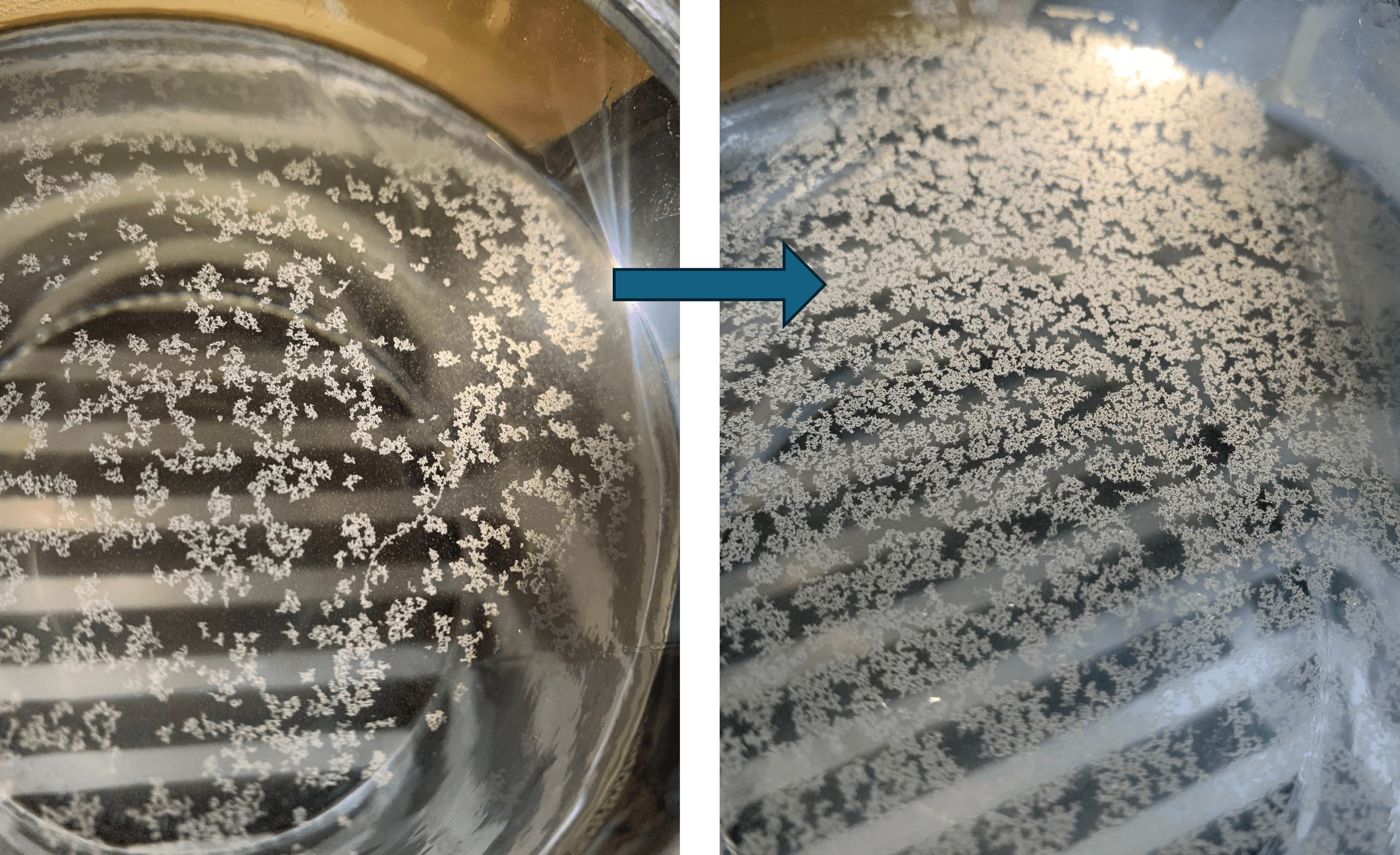
Kettle test: restructuring of the limescale after boiling, comparison between tap water (left) and dynamized water (right)
Dynamization will modify the structure of limescale in water
The Biodynamizer treats limescale with the mechanical vortices & magnetic vortices by modifying its mineralogical structure and the morphology of the tartar crystals (the limestone is pulverized/fragmented, becomes less encrusted, which makes it easier to remove, see in this regard our analyses on the treatment of limestone with the Biodynamizer).
The polarization of the water molecules induced by the magnetisation makes it possible to reduce the drawbacks of limescale (which clings to the walls):
- The mass of scale remaining around the resistances and at the bottom of the boiler/water heater decreases
- The adhesion of scale inside sanitary pipes decreases
- The adhesion of scale in household appliances (kettle, pans, dishwasher, shower screen, taps) decreases
This is done in the Biodynamizer thanks to:
- The combination of a fast-turbulent flow and a strong magnetic field who amplify the efficiency of the magnetic treatment of limescale. The magnetic force potential will be proportional to the velocity of the flow inside the vortex.
- The alternating strength and orientation of magnetization (N/S – S/N) as well as the magnetization of the copper tubes increases the magnetic gradients (= (= the strength of the lines of magnetic fields in space) and also improves the efficiency of the treatment of limescale.
The disadvantages of a water softener
- Does not filter pollutants in the water
- Altered taste of water (salt taste due to sodium)
- Removes much of the precious minerals (containing trace elements)
- Does not provide a limescale protective layer on the inner surface of the pipes which protects against corrosion of galvanized pipes (if set to ≤ 5 ° f)
- Adds sodium to the water (Na + = +/- 60% of the salt composition; = +/- 140 mg / L for a reduction in hardness from 30 ° f to 5 ° f; recommendations for sodium consumption for humans: max 200 mg / L (according to European directive on drinking water 98/83) because sodium increases blood pressure (bad for people with heart or kidney problems)
- Its operation uses +/- 100 Kg / year of salt (Sodium Chloride: Na + Cl-) for its regeneration; this produces chlorine dioxide (salt + chlorine from city water) which is released into the water which corrodes the galvanized pipes!
- Releases brine (limescale + chlorite) to the environment (via sewers)
- Discards a lot of water for regeneration (100 L of water per regeneration which takes place every 5 days!)
- There is a risk of development of bacteria & germs in the ion exchange chemical resins if there is no regular maintenance (after 5 years of operation: An annual maintenance is compulsory in order to disinfect the resins! Otherwise there is a risk of bacteriological contamination of the water by microorganisms!).
Maintenance of the most common household appliances
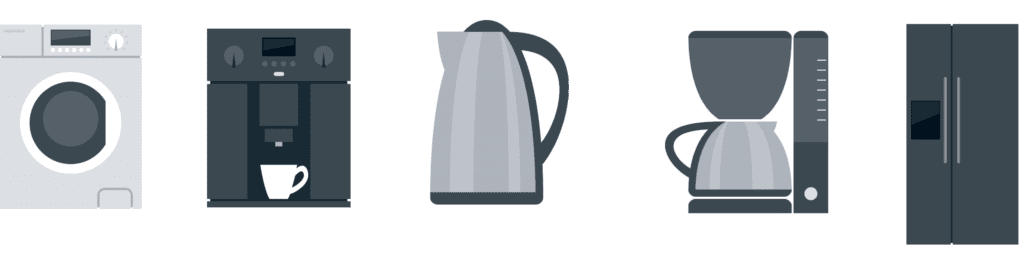
- For the iron, use distilled water from the clothes dryer to prevent it from getting clogged (standard procedure),
- For taps, wipe a cloth (if necessary, with white vinegar) every 15-30 days at the outlet of your taps (this is a standard maintenance).
- For shower heads, soak them every 6 months in white vinegar (this is standard maintenance).
- For kettles or coffee machines, do not allow the water to boil at 100 ° C (60-70 ° C is clearly sufficient), because water vapor tends to precipitate limescale. Renew the water for each boil + regularly clean the bottom of the container with white vinegar to descale it. This is a standard maintenance depending on the interior coating of the devices,
- Regarding the dishwasher, standard maintenance: rinse aid, dishwasher tablets for the shine of glasses, regenerating salt in the dishwasher, regular cleaning of the dishwasher filter; in case of very hard water, use crystallized citric acid (in combination with the tablets).
- For shower screens (normal cleaning),
- Water decanters, clean the bottom with white vinegar or citric acid in water,
- For the washing machine you can continue to use fabric softener (but it will be less necessary).