


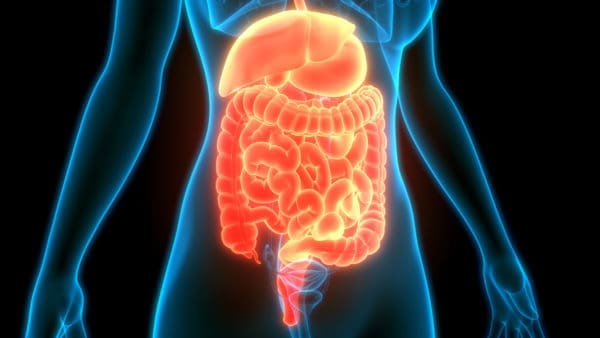
Metabolism and bioavailability of minerals in water (tap or bottled)
The inorganic minerals found in water originate from the rocks the water passes over or through during its cycle (riverbeds, percolation through the Earth’s mineral layers, etc.).
These inorganic minerals make up the “dry residues“—measured in mg/L—found in the water (determined after evaporating the water at 180°C). They consist primarily of calcium (Ca) and magnesium (Mg)—the components of limescale (which forms scale deposits when water is heated)—and, to a lesser extent, trace elements (copper, iron, zinc, selenium, silicon, fluoride, etc.).
There are two methods for measuring dry residues:
- From the water hardness in French degrees (°f) and multiply by 10 mg/L ; this yields the amount of limescale (calcium carbonate, which forms scale). For example, 40°f = 400 mg/L (400 ppm, or parts per million); dividing this figure by 80% gives 500 mg/L of dry residue.
- From water’s conductivity, measured in microsiemens (µS/cm), and apply a standard conversion factor of k = 0.64. For example, 779 µS/cm (for 40°f) × 0.64 = 499 mg/L of dry residue (this is what a TDS meter measures).
Inorganic minerals are measured in mg/L and should not be confused with pollutants, which are measured in µg/L (meaning they are 1,000 times lighter and smaller) and are not detected by TDS (Total Dissolved Solids) meters.
The body absorbs these inorganic minerals at a rate of approximately 48% (this percentage of metabolization is comparable to the absorption rate of organic Ca & Mg found in fruits and vegetables!), specifically:
- Between 37% and 46% for Ca (absorption comparable to that of milk)
- Between 52% and 59% for Mg
This means they are absorbed by the intestine, cross the intestinal wall, and enter the bloodstream. Once in the blood, they become available to supply the body’s cells. The ~48% of absorbed minerals are available to nourish cells.
This equates to a contribution of approximately 3% of the Recommended Dietary Allowance (RDA) for Mg and 24% for Ca (depending on age, gender, water intake—assumed to be 1.5 L/person/day—and the water’s mineral content, hypothetically set at 500 mg/L dry residues)! Consequently, the inorganic minerals present in water are highly bioavailable to our bodies—much like those found in solid foods—and thus contribute to our good health!
The inorganic minerals remaining in the intestine (~52%) are eliminated via the stool. Any excess absorbed inorganic minerals that are not metabolized—approximately 1% —are filtered by the kidneys and excreted in the urine. Therefore, there is no adverse effect on kidney function in healthy individuals, nor is there any risk of mineral overload. In fact, water rich in Ca and Mg actually has a protective effect against kidney stones!
Given that the average population has a calcium deficiency of around 40% (relative to average nutritional requirements)—and even 70% for magnesium—we believe it is essential to drink mineralized water with a mineral content (dry residue) ranging from 250 to 600 mg/L!
Importance of minerals in drinking water
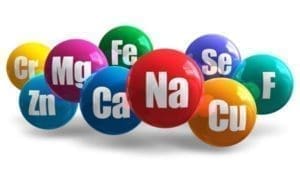
- The inorganic minerals in tap water contribute approximately for 3% of the magnesium and 24% of the calcium to the Recommended Nutritional Intake of calcium and magnesium for a person * for one person (for an adult M / F: calcium requirement +/- 900 mg /d, in magnesium +/- 400 mg /d)! Calcium and magnesium are therefore useful for health. Calcium contributes to bone health, has a beneficial role in hypertension, cardiovascular accidents, colon cancer. Magnesium is involved in the activation of more than 300 enzymatic systems, fights fatigue, diabetes and coronary insufficiency as well as osteoporosis … Given that the average population has a calcium deficiency of around 40% (relative to average nutritional requirements)—and even 70% for magnesium—we believe it is essential to drink mineralized water with a mineral content (dry residue) ranging from 250 to 600 mg/L! This depends on the mineral content of the water and the age of the people concerned, Source: Study on the absorption of calcium and magnesium in natural mineral waters, Patrice Fardellone, CHU Amiens, Université Picardie Jules-Verne, 2015 ; « The mineral elements present in tap water, by participating in the daily mineral supply necessary for the proper functioning of the body, have a definite beneficial role for health. Calcium in water could also play a role in protecting against cardiovascular disease. The role of calcium in fat elimination and blood cholesterol regulation is also recognised » (source Ministry of Health France 2006).
- The WHO (World Health Organization) speaks of an “optimum below 1000 mg / liter“.
- The Superior Council of Public Hygiene of France fixes in its decrees of 1990 and 1995 relating to the quality of water intended for human consumption the quantity of dry residues, after drying at 180 ° C, at maximum 1,500 mg / liter.
- It is also important to have calcium-magnesium (components of limescale) in the water because of the rounder and velvety taste of water containing mineral salts.